We learned to buy media by selling it first


By Mat Costa August 12, 2026

The most common question we hear in media plan reviews is, “Who are we reaching?” But the more important questions that rarely get asked are, “Where will this run?” and “Will a real person actually see it?”


At the end of the day, that’s where the budget goes.

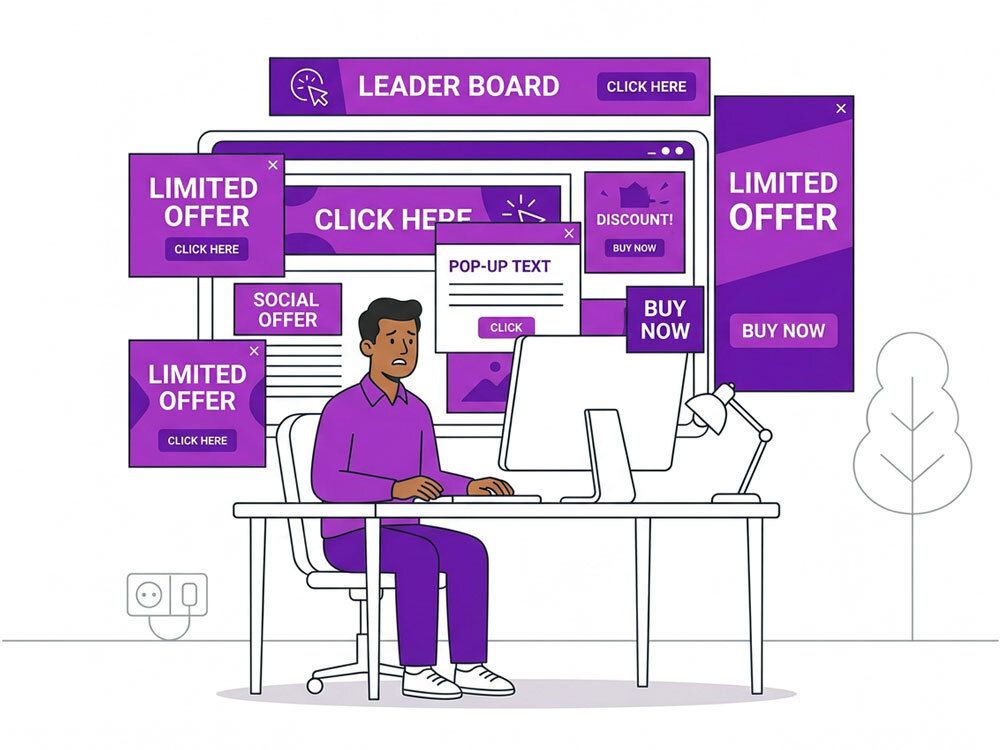
A campaign running on 44,000 websites is not a plan

In 2023, the Association of National Advertisers (ANA) studied the open web programmatic market. The number that stuck with me wasn’t a dollar figure. It was a count. The average campaign in the study ran on roughly 44,000 websites.


But nobody strategically selected that. No planner sat down and approved 44,000 publishers. The ANA estimated that a far more selective approach could have reached about 95 percent of the same audience.


Let’s assume the targeting worked. The ad found the right person. But it found them somewhere no brand would have purposely chosen to show up.


Fast forward to the ANA’s most recent benchmark, the Q1 2026 report: The strongest-performing advertisers turned 54 percent of their spend into impressions that met quality standards. The weakest turned 32 percent. Same market, same platforms, same auctions.


The stronger group also paid less on a raw cost per mille (CPM) — or cost per thousand impressions — basis. Adjust for how much of that spend produced a real, viewable, brand-safe impression, and the weaker group was paying about two and a half times as much for the same thing.


Sounds backward, right? Quality inventory should cost more, and it does, per impression.


But the ANA found the gap between the two groups had almost nothing to do with fees. Transaction costs were about two percentage points apart. The difference was in what the media actually delivered, roughly nineteen points. The weaker group wasn’t getting fleeced by middlemen. It was paying real money for impressions that didn’t work.


Price isn’t always a reliable signal of quality. Low-quality inventory isn’t priced by what it’s worth; it’s priced by whatever the auction will bear, and when enough buyers are chasing cheap outcomes, the junk gets bid up. You can pay a premium for garbage.

If price were directly correlated with quality, you could simply filter by price and skip the rest. 

This is not an argument against the open marketplace

We're not saying every inventory buy should be pre-negotiated and guaranteed with a publisher.


The open internet is the only place you can reach people at real scale outside the walled gardens. It is where budgets have leverage, across publishers competing for your business. That is a genuine advantage, and it is where most of our clients’ money will go.


But it rewards the same discipline you already bring to your audience choices, and not many apply it.


Nobody buys an audience by taking every segment a vendor puts in front of them. You pick. You test. You cut what doesn’t work. You end up with a list you can defend in a room. Then the same team sets a budget, hands it to a platform, and lets the site count drift into five figures without ever looking at it.


Treat inventory the way you treat audiences, and the open market performs. Skip that step, and the money quietly fails a brilliantly thought-out campaign.

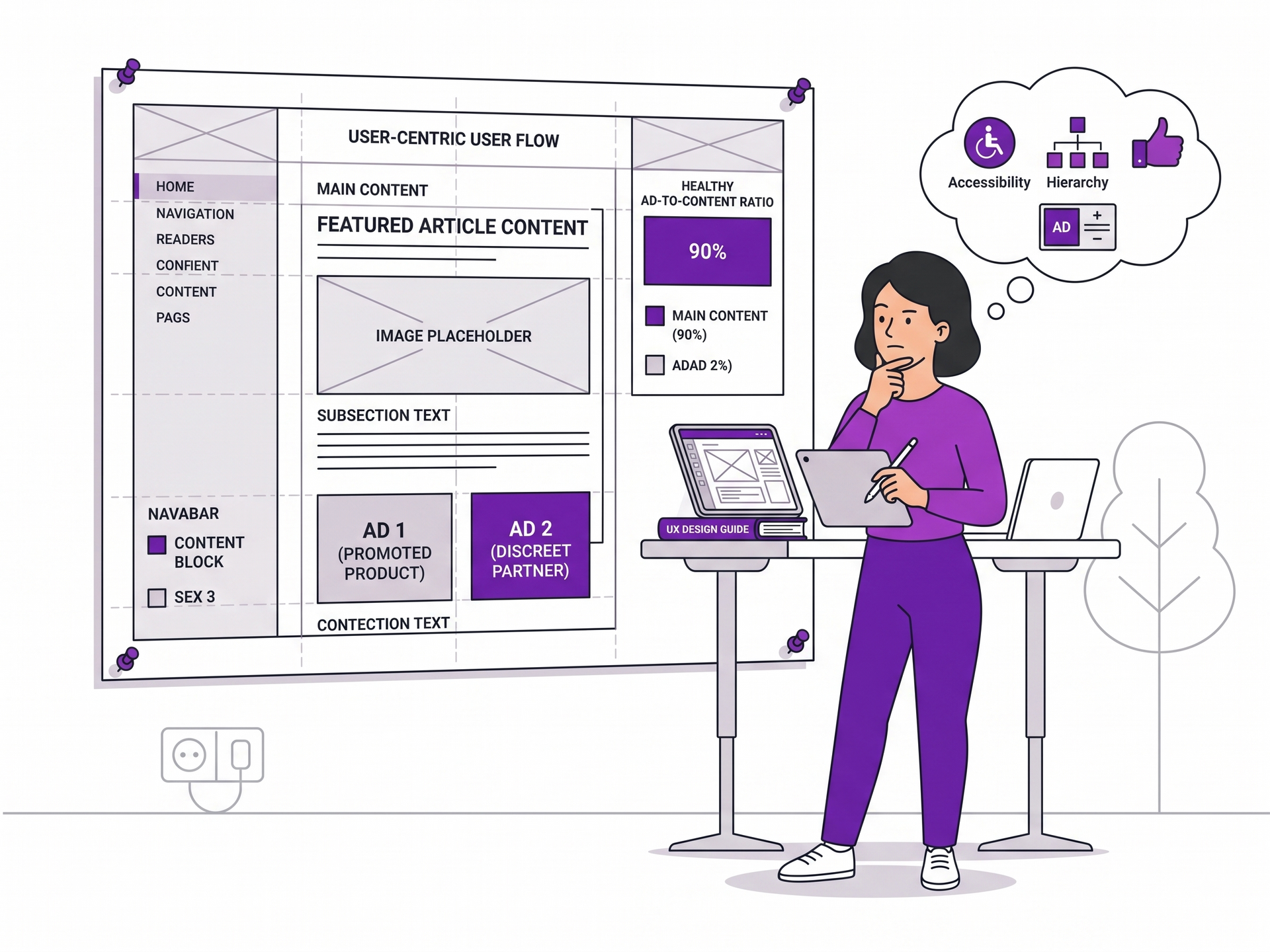
Person at a standing desk presenting a plan for a website build that meets good audience standards

What you learn when you are the one selling the page

Synqed is new, but the experience behind it isn’t.


Our parent company has been in the publishing business for a very long time.


Newsrooms, local audiences that depend on the content they produce, and ad products sold to real businesses in real markets. Most of the people building Synqed spent years on the other side of this transaction, so we see things through a unique lens.


When you run the page, you know what a reader experiences at three ad slots versus twelve, because you have had the argument about adding the twelfth. Somebody wants the revenue. Somebody else must defend the reader. We’ve done both.


You learn what happens to engagement when a page gets slow and heavy on a phone, and you learn it from your own numbers rather than a case study.


You also know what the shortcuts look like, because you’ve seen them all over the years. Refresh the same slot every few seconds and sell one view five times. Stack units below where anyone scrolls. Resell through enough hands that the buyer can’t tell which site they bought from.


This isn’t groundbreaking. But it is the knowledge you don’t get from a dashboard. You get it from being accountable for a page that has to earn a reader’s attention and trust every day.

The obvious question...

No. Synqed exists to buy the best inventory for the client’s objective. 


Our sell-side background isn’t a source of supply. It is a set of instincts about what good supply looks like, and what it looks like when someone is cutting corners. We know what a healthy ads-to-content ratio looks like because we have defended one.


If anything, it makes us more accountable for doing the right thing and being good stewards of a brand's media investment.

Audience answers who sees it. Inventory decides if they do

Targeting has become genuinely sophisticated over the last ten years. The other half of the media activation still has a way to go. Two campaigns can chase the same audience with the same creative at nearly the same price and produce completely different outcomes. The variable is where the ad landed.


If you want to learn more about our methodology for choosing quality inventory, we would love to hear from you.


Planning what's next?

We can help turn the opportunity into a connected strategy.

SHARE THIS

Latest Posts

September 10, 2026
See how a statewide online education provider used a full-funnel media strategy to increase visibility, generate qualified leads and drive student applications.
September 10, 2026
See how a statewide healthcare organization used trusted content and targeted media distribution to increase awareness, engagement and action.
September 10, 2026
Driving educator interest through precise audience targeting, video creative and streamlined lead generation for student travel campaigns.
September 8, 2026
a stronger future across six states.
Telling the same story across different products wont yield good results.
By Brian Huntley August 20, 2026
Learn how to craft compelling product visuals by starting with clear objectives, showing more than just the product, and designing for context. Discover why thoughtful storytelling converts better than beautiful design alone.
Woman enjoying a bowl of soup on a cold and rainy day.
By Synqed Team August 13, 2026
There are very few external motivators that can inspire a decisions silently at scale greater than weather. Marketers can use that to get quick lifts in performance.